
Two Sisters Redux – Part 2
 |
| detail from Twa Sisters – quilt by Dan Willig |
So, as I introduced in my first post this week, I’m trying to add some depth and variety to my first series of entries from six months ago on the ballad known as Child 10, “Two Sisters”, “Wind and Rain”, etc. You can find the entries from the original series here (for an introduction), here (for a way to think about the folk process), and here (for a conclusion and some analysis.)
This ballad is like the Amazon; ancient yet still abundantly flowing along many principal streams, all related but distinct. In the preceding post I explored some branches of the ballad onto which I did not venture originally, but today I’m going to go a bit further up the tributaries on which I did embark six months ago to do a more thorough exploration. In my next post then, I’ll take all this new variety and see if I can’t come to a more fully developed understanding of the wider ‘ecosystem’ to which this ancient murder ballad gives rise. (And in a later post, we’ll explore the new short movie “Two Sisters”, the newest water to join this great river.)
“Two Sisters” and “Bow and Balance to Me”
I opened my discussion of this ballad with this great version (or here on YouTube) recorded by Clannad, the lyrics of which can be found here (and I’m *sure* now it’s “the boys are bound for me” and not “born for me!”.) The version, as I noted in the original series, includes nothing of the magical accusation by the instrument (fiddle, harp, etc.) which brings justice to the murdered sister at the eldest’s wedding. Justice comes in a realistic, if brutal, way.
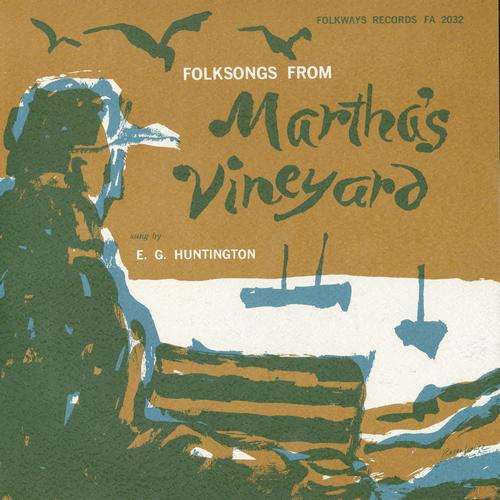
Likewise I introduced Tom Waits‘ awesome version of “Two Sisters” (lyrics), derived almost word for word and note for note from Horton Barker‘s “Bow and Balance”, and quite similar to Jean Ritchie‘s “There Lived and Old Lord” (lyrics). Again, none include the magic.
 |
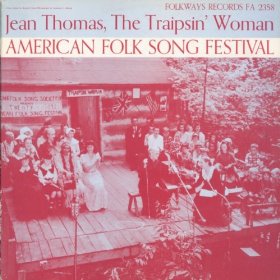
Listening to the refrains alone shows that all three have a clear connection to Clannad’s version (or rather its ancestor) and it would seem that there is at least a circumstantial case to be made that this stream of the ballad in America has its source in Ireland. However, some posters in the Mudcat forum swear that Clannad got their version from America (with this as one source.) The evidence is hearsay, though believable. More surprising is the claim that the ballad has never been recorded in Ireland. This doesn’t seem to hold up to scrutiny. Child himself noted “It has been found in England, Scotland, Wales and Ireland…” And convincingly, Hugh Shields, in his 1972 article “Old British Ballads in Ireland“, clearly documents Anglo-Irish examples of Child 10, and argues as well that the Gaelic “Baile Leo” is “derived with certainty from” and is “an entire recreation of the English “Two Sisters””. (Can anyone say “Integrator“?) Whether or not there is a variant in English *born* in Ireland is not clear, and I note on Mudcat as well a debate about the Gaelic version, but there is no doubt at least that Child 10 spread to Ireland and has been collected there.
For example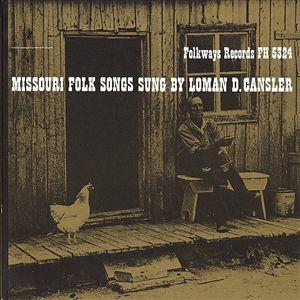
 |
Whatever its origin, it’s not the only course this ballad took in the new nation.
“Wind and Rain”
If the Irish and American variant noted above leaves out the magical retribution, another branch of the ballad in America focuses almost exclusively on it at the expense of the back story behind the murder. It seems by far today to be the most popular version among American recordings artists, and is often known as “Wind and Rain” or “Dreadful Wind and Rain”.
In my original post I introduced you to Gillian Welch’s and David Rawling’s version (lyrics), as well as Jerry Garcia’s and David Grisman’s (lyrics) as prime examples. There are a couple other modern renditions most worthy of note. Crooked Still definitely acquit themselves well with this ballad, and it seems to me they evoke the movement of water with their instruments. It’s really a wonderful recording, and they pull it off live just as well.
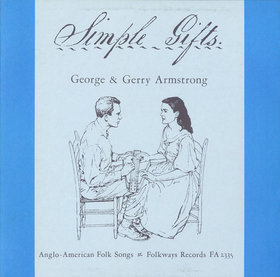 So, the harder thing to figure out here is the likely source of this variant of Child 10. My Spotify playlist (now at 70+ tracks) has fourteen examples of this version, but only three seem to have been recorded earlier than Garcia and Grisman’s (released 1996 but recorded on 8/27/90.) The reference to County Clare in the Welch/Rawlings version suggests an Irish origin, but both of the oldest recordings I can find are American.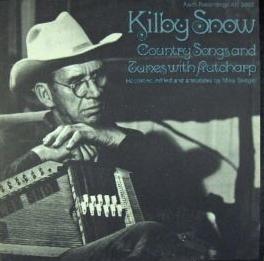
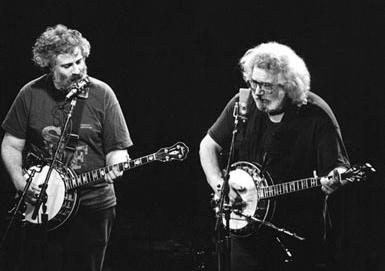 |
| What kind of reckless folkies would play two banjos on stage? It’s terrifying really. |