
BANG BANG: POP! goes the murder ballad
Prelude: Battle for the Charts, Battle of the Sexes
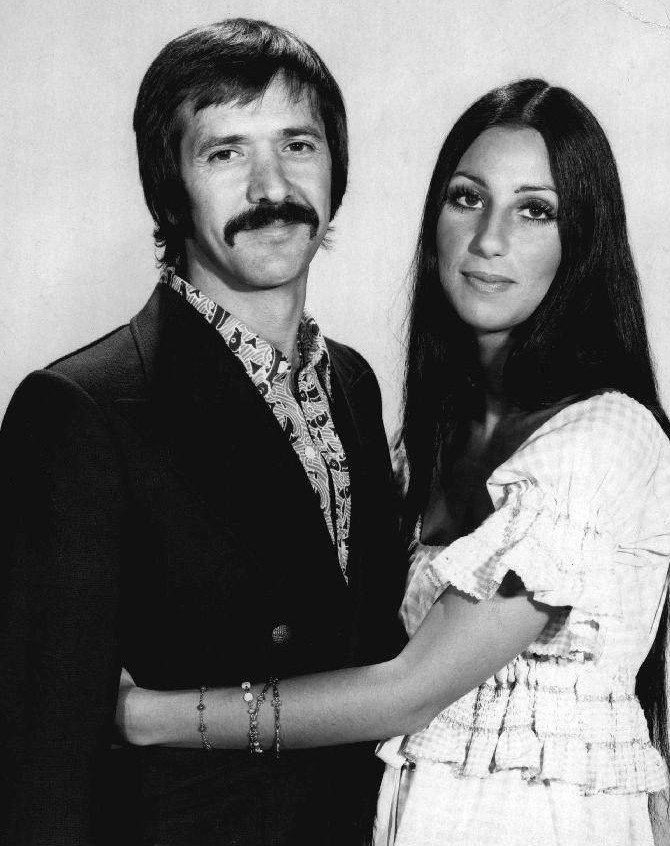
“Sonny and Cher 1971” by CBS Television
In 1966, Cher released “Bang Bang (My Baby Shot Me Down),” her biggest solo hit of the 1960s and her first to make the top ten on Billboard’s Hot 100 – the song stayed at the #2 spot for a week. So close. The song couldn’t beat “(You’re My) Soul and Inspiration” by the Righteous Brothers, the #1 song that week. And that year no one – not the Righteous Brothers, not the Four Tops (“Reach Out I’ll Be There”), not the Mamas and the Papas (“Monday Monday,” “California Dreaming”), not the Supremes (“You Can’t Hurry Love”), not the Rolling Stones (“Paint It Black”), not the Beatles (“We Can Work it Out,” “Paperback Writer”) – no one could compete with U.S. Army Staff Sargeant Barry Sadler, a Vietnam combat medic whose “Ballad of the Green Berets” was the most popular song in America.
A crossover hit that also reached the #1 spot on easy listening and country charts, “Ballad of the Green Berets” is about the honor of dying in combat as a member of the United States Special Forces. It concludes with the image of a bereft Green Beret widow receiving her husband’s last request – that their son meet the same honorably violent fate. Sadler debuted the song on The Ed Sullivan Show and The Jimmy Dean Show in full uniform.
In an odd juxtaposition, Sadler set the song to the tune of “The Butcher Boy,” a traditional folk song about a man who abandons his mistress in a much more cowardly way, leading to her shame and suicide. In some versions she is also pregnant with his child. In contrast to the Green Beret with his silver wings, this disgraced woman’s last request is to be buried with a dove resting on on her breast, a symbol of her love. Was this a subtle commentary on Sadler’s part? Probably not. (He was obviously not that subtle.) Regardless, the story of betrayal and shame in the original song somewhat tarnishes the valorization of “America’s best” in the “Ballad of the Green Berets.” Sadler himself met a rather ignominious ending. Although “Ballad of the Green Berets” was covered by the likes of Johnny Cash and became the title song of a John Wayne film, he was basically a one hit wonder.
As fascinating and bizarre as it is, though, Sadler’s song is not my main interest. Rather, I use it to illustrate the mainstream setting into which Cher’s “Bang Bang” – the song I do want to say a few more things about – was released in 1966. “Bang Bang” offers a feminine perspective on the very masculine American preoccupations that Sadler channeled so successfully for the pop charts – war, guns, violence, death, honor, patriarchal legacies, shoot ‘em up politics, Wild West justice, American pride as elite military might, and so on.
This more melancholy and well-known cover version by Nancy Sinatra, with tremolo guitar effects by Billy Strange, was also released in 1966 (this clip also contains the lyrics):
In a way, “Bang Bang” popularizes the perspective of the widow who receives the Green Beret’s last request in Sadler’s song, as well as the betrayed mistress in the original song on which he based its tune – the woman, that is, who is allowed to play a man’s game in a man’s world but is fated lose the fight, left behind or left for dead, in disgrace. Is “Bang Bang,” then, a murder ballad rooted in the folk tradition? Clearly no. But also, yes. Or is it too a silly pop song? Again, clearly no. But also, yes. I’ll look at how that works in this post. Finally, I’ll end up taking a ride with Quentin Tarantino who illustrates how, sometimes, this betrayed woman gets her justice, and her delicious bloody revenge.