
Dear [Murder] Balladeer: John Jacob Niles and Forest Mountain Hymnal
<<<Back to page 1
The book is only 24 songs?
Jonathan: The book has 110 different songs, each have several versions. He groups the book by which Child Ballad the song is derived from. For each Child Ballad, there may be as many as 2-4 different variations.
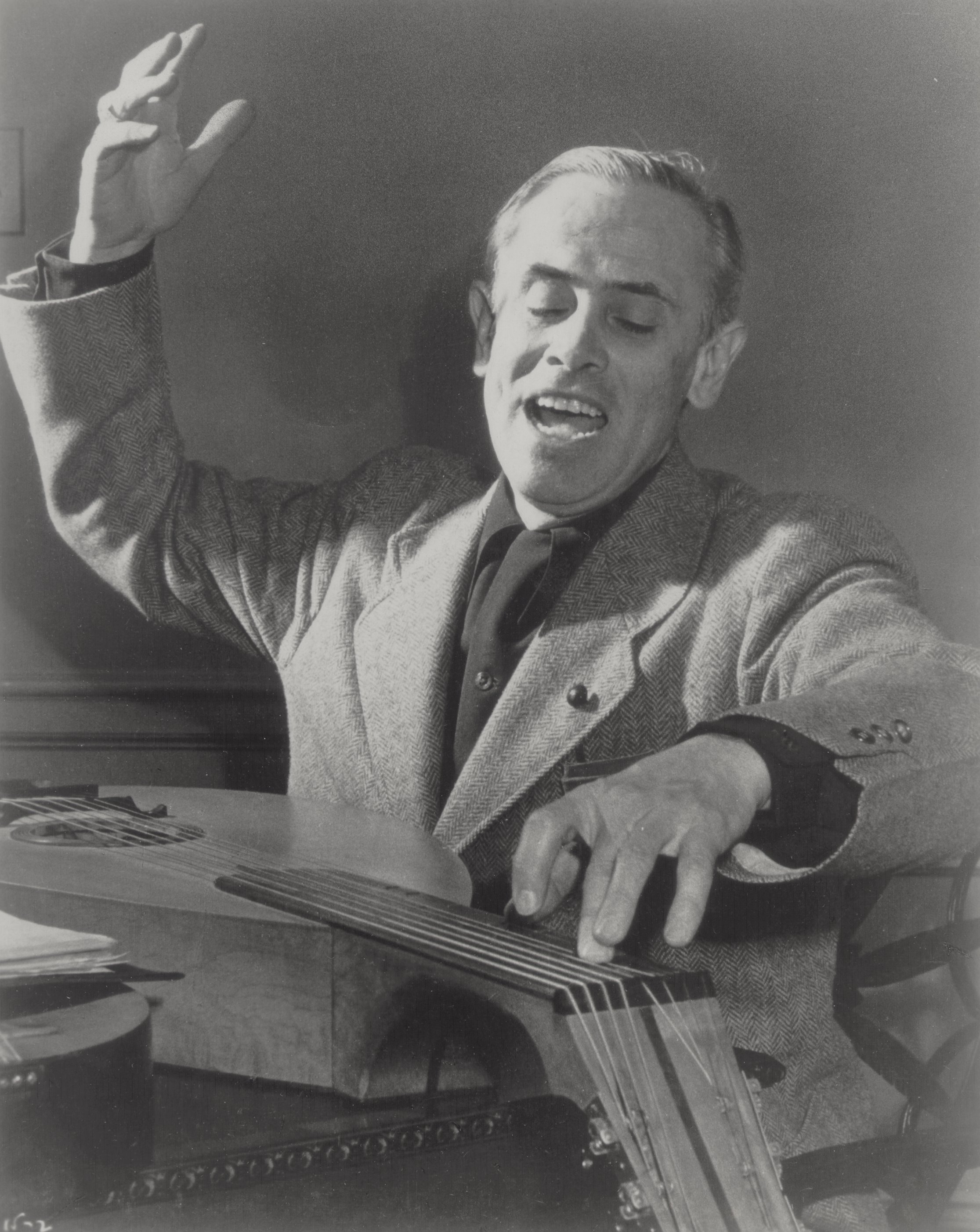
John Jacob Niles posed with dulcimer; George Kossuth, 1938 (photo from The John Jacob Niles Photographic Collection at the University of Kentucky)
Rebecca: We went in order, and we skipped the ones that Niles had done and recorded. He copyrighted the ones that he felt he had changed enough.
So the project is just going to focus on 24?
Rebecca: Our plan was to do two of these a month. There are others. We’re hoping to choose some others. Some of them are stand-out tunes.
Jonathan: Some are long, and not that great.
Rebecca: Some are 54 verses long …
Jonathan: Going forward, after we’re done with this initial project, we’re thinking of collaborating with other artists and inviting them to record their versions of other songs in the book.
Do you see yourselves working through this material as folklorists or as performing artists?
Jonathan: The reason that we decided to pursue this project so wholeheartedly is that it satisfies a lot of our different personal goals and interests, both as individuals and as a musical group. It’s definitely about the folklore and a little bit of “cultural rescue.” It’s definitely about developing our artistic abilities as musicians. Using this process to have a consistent project that engages us in practicing music. It makes us try to branch out a bit from what we normally do musically, and hone the craft.
Rebecca: I think the reason we were drawn to this topic is cultural preservation. That’s something driving us, our performing it aside. We’re both from the South. One thing I love about this material is that it goes against the stereotype of Southern music. That’s important to me—to make it more accepted or widely known that there’s a rich culture in the South that’s our inheritance. Some of the songs are so beautiful and so rich.
Jonathan: They obviously have come from a sophisticated culture, but once they’re being sung by someone in the hills of Kentucky, everybody assumes it’s just being done by some ignorant hillbilly.
Rebecca: Both of us have ancestors who worked in the coal mines. It’s wonderful to think that we’re becoming a part of our cultural heritage.
Jonathan: The project is definitely an outward looking project in one sense; that it’s trying to change other people’s perceptions of this part of the country. It has all of these different elements. Becca was an English major in college, and writing about these songs is good for her as a writer and as a literary mind.
What goes into your thinking in arranging these songs for your recordings? You have a different style from Niles, and it’s also more formal sounding than much traditional music from Appalachia.
Jonathan: It’s kind of a process. One of the purposes of this project is to figure out what we sound like as a group. What are our strengths? What are our weaknesses? Each song highlights a different instrument. Those sorts of considerations will take the lead.
Rebecca: We had anticipated having more time to give it. We had talked about learning the dulcimer, or trying to do it in Niles’ style. We haven’t been able to do that. We hope to do so at some point. Jonathan’s been playing the banjo for a decade, which is a misunderstood instrument. We wanted to feature it in the arrangements where Jonathan had the lead.
When we were talking with John Ed Niles, he was nervous about the songs and how we’d arrange them.
Jonathan: It seemed like maybe he had had similar queries about the songs when giving permission before, and had been burned by the results.
Rebecca: We’re trying to be respectful, and trying to make music that John Jacob Niles wouldn’t hate. We haven’t altered the melodies at all, and we’ve only altered a couple of chords.
Tell me about the two murder ballads you’ve done so far, “The Little Drownded Girl” and “Tiranti, My Love.”
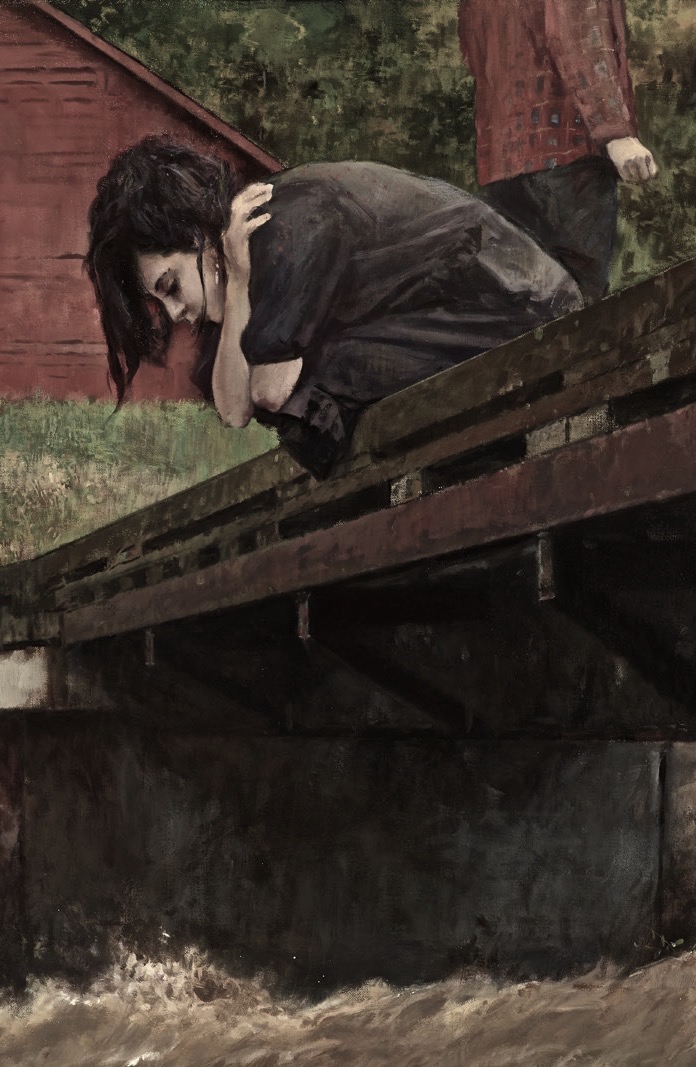
Two Sisters (center panel) 2013, by Julyan Davis
Murder Ballad Paintings
Rebecca: “The Little Drownded Girl” was something we were both really excited about. I think the version we ended up doing is really lovely, and I like that the story is very simple, very short. Because of that it’s all the more sad. It’s heart-breaking in its brevity.
Jonathan: Especially if you’re familiar with the story, and the other versions, this one comes across as unique. The murder is entirely omitted.
Rebecca: There’s so little motivation given. The voice of the eldest sister is absent. All you have is this sweet, innocent voice asking to be saved. What’s left out is as important as anything else.
Jonathan: The same is true with “Tiranti, My Love.” The original songs have lots of verses, explaining the whole story. This one has just four verses. You kind of have to know the story in order to fully understand.